
The cultural tradition of the tamil community heads a long way back to few thousand years. We had different forms of art, each one with its own uniqueness and tradition. Each form of art had its own rules and regulations that had to be strictly adhered to. One such artform which has its own cultural background is devarattam or thevarattam.
The term devarattam is derived from two words devar which meant gods/kings/warriors and attam meant dance. It is a dance form that was performed during the victorious occasions of the king. In ancient times the king was considered to be the representative of the almighty and hence they were praised as gods. This dance was performed by the kings or warriors so as to celebrate their victories.
There are many references from the history where devarattam was performed. It was initially practiced by the pandyas and latter on spread to the other parts of the southern India. The dancers are mostly male who do perform in front and behind the king’s chariot during his victorious processions. It is also said that the king himself would participate in this dance. The mighty cholas also had this practice. The songs that were sang during devarattam were generally in praise of the king and his lineages.
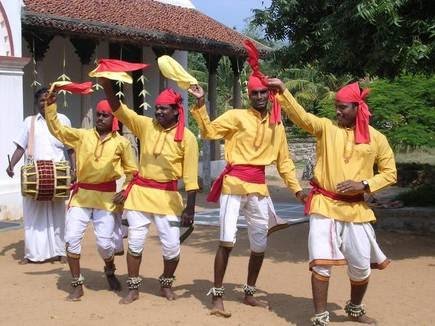
It is a combination of two dances ‘muntherkuruvai’ and ‘pintherkuruvai’. There are basically 72 steps in devarattam and the rest of them are combinations of those basic steps. The dancers would tie colorful turbines in their head and have colorful pieces of kerchiefs which they swing in their graceful movements. They dance to the music from a special type of drum called ‘devadundhummi’.
It is now being practiced by the Kambala Nayakar community. They are tamil speaking telugu community who are found across Tamil Nadu. They perform this dance during special occassions and also in temple festivals. They are considered to be the descendants of Veerapandya Kattabomman at Kondangipatti of Madurai district.
Devarattam is considered to be a sacred art that is being offered to the god. Although it was restricted to the Kambala Nayakar community, it is now being taught to other communities also. Many of us have forgotten this rich cultural folk dance. It has to be taught to the next generation so as to preserve our rich culture.
 varsha